See How We're Different
Call Us: (940) 268-5112
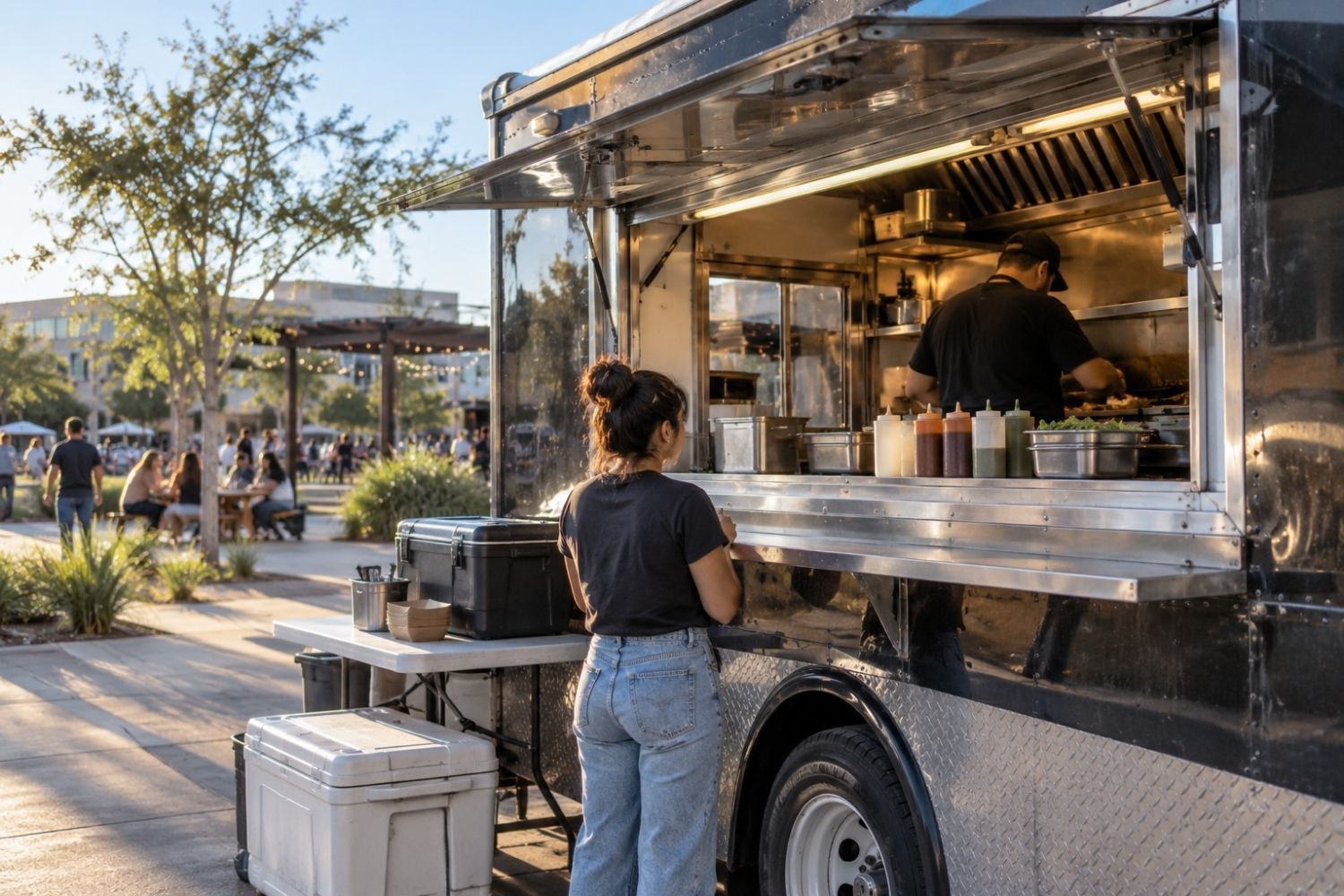
Running a food truck in Texas means juggling a dozen things at once: perfecting your menu, scouting locations, managing staff, and keeping customers happy. Insurance probably isn't what gets you excited in the morning, but it's the thing that keeps your business alive when something goes wrong. A grease fire at a festival, a customer claiming food poisoning, or a collision on your way to a catering gig can wipe out months of profits in a single afternoon.
Texas food truck insurance requirements vary depending on where you operate, what you serve, and how your business is structured. The state mandates certain minimums for commercial auto coverage, but cities like Austin, Houston, and Dallas each have their own permitting rules that often require additional liability coverage. Getting this wrong means more than just fines: it can mean losing your permit entirely or facing a lawsuit without protection.
The good news is that coverage for mobile food vendors has become more accessible and affordable over the past few years. Specialized insurers understand the unique risks food trucks face, and independent agencies like Denton Business Insurance can shop multiple carriers to find policies that actually fit your operation. Whether you're running a taco truck in Fort Worth or a gourmet dessert trailer in San Antonio, understanding your coverage options is the first step toward protecting what you've built.
Texas State and Local Insurance Requirements for Food Trucks
Mandatory Commercial Auto Insurance Limits
Texas requires all commercial vehicles to carry minimum liability coverage, and your food truck is no exception. The state minimums are $30,000 per person for bodily injury, $60,000 per accident for bodily injury, and $25,000 for property damage. These limits apply whether you're driving to an event or parked at a commissary.
Here's the catch: state minimums are rarely enough for a food truck. If you're involved in a serious accident and your liability exceeds your coverage limits, you're personally responsible for the difference. Most experienced operators carry at least $100,000/$300,000/$100,000 in liability coverage, and some event organizers require even higher limits before they'll let you on their property.
Texas Workers' Compensation Laws for Small Businesses
Texas stands alone as the only state where private employers aren't required to carry workers' compensation insurance. This sounds like a cost savings, but going without coverage as a "non-subscriber" opens you up to employee lawsuits without the legal protections that workers' comp provides. If an employee burns themselves on a fryer or slips on a wet floor, you could face a personal injury lawsuit with no cap on damages.
Most food truck owners with employees find that workers' comp premiums are worth the peace of mind. Expect to pay between $0.75 and $2.50 per $100 of payroll, depending on your claims history and the specific duties your employees perform.
City-Specific Permitting and Insurance Certificates
Each Texas city has its own rules for mobile food vendors. Austin requires a $1 million general liability policy before issuing a mobile food vendor permit. Houston's requirements vary by location and event type. Dallas mandates proof of insurance as part of the health permit application process.
You'll need certificates of insurance (COIs) ready to go. Event organizers, commissary kitchens, and city permitting offices all want to see proof that you're covered. Working with an agency that can issue same-day COIs saves headaches when opportunities come up quickly.
Essential Coverage Types for Texas Mobile Food Vendors
General Liability and Product Liability Protection
General liability covers third-party injuries and property damage that occur because of your business operations. If a customer trips over your power cord or you accidentally damage a venue's property, this coverage responds.
Product liability is where things get specific for food businesses. If someone claims your food made them sick, product liability coverage pays for legal defense and any resulting settlements. Food poisoning claims happen more often than most new operators expect, and they don't require proof that you actually did anything wrong: just the allegation can trigger expensive legal costs.
Most insurers bundle these coverages together for food service businesses. Expect to pay between $400 and $1,500 annually for a $1 million per occurrence policy, depending on your revenue and menu complexity.
Inland Marine and Commercial Property Coverage
Your food truck itself needs protection beyond just auto liability. Commercial auto covers the vehicle, but inland marine insurance protects your equipment while it's in transit or at a location. This includes your cooking equipment, refrigeration units, point-of-sale systems, and inventory.
| Coverage Type | What It Protects | Typical Annual Cost |
|---|---|---|
| Commercial Auto | Vehicle, liability while driving | $2,000 - $5,000 |
| Inland Marine | Equipment in transit | $300 - $800 |
| Commercial Property | Equipment at fixed location | $400 - $1,200 |
| Contents Coverage | Inventory, supplies | $200 - $600 |
Commercial property coverage applies when your truck is parked at a commissary or storage facility. The distinction matters because standard auto policies often exclude coverage for equipment when the vehicle isn't in motion.
Business Interruption and Food Spoilage Insurance
A breakdown that sidelines your truck for two weeks doesn't just cost you repair bills: it costs you all the revenue you would have earned. Business interruption coverage replaces lost income during covered events, whether that's an accident, equipment failure, or damage from a storm.
Food spoilage coverage is particularly relevant for Texas operators. Summer temperatures regularly exceed 100 degrees, and a refrigeration failure can destroy thousands of dollars in inventory within hours. This coverage typically costs $100 to $300 annually and can save you from absorbing a total loss on perishable goods.
Factors Influencing Food Truck Insurance Costs in Texas
Average Premium Ranges for Lone Star State Operators
A fully insured Texas food truck typically pays between $3,000 and $8,000 annually for comprehensive coverage. That range is wide because food truck operations vary dramatically. A weekend-only coffee trailer has different risk factors than a full-service taco truck working lunch rushes in downtown Houston five days a week.
Here's what a typical breakdown looks like for a mid-sized operation:
- Commercial auto liability and physical damage: $2,500 - $4,500
- General and product liability: $800 - $1,800
- Equipment and contents: $400 - $1,000
- Workers' compensation (if applicable): $500 - $2,000
Carriers like Nationwide, Travelers, and Mercury all write food truck policies in Texas, but their appetites and pricing vary. An independent agency can run quotes across multiple carriers to find the best fit for your specific situation.
Impact of Location, Equipment Value, and Revenue
Where you operate matters significantly. Food trucks working primarily in Houston, Dallas, and San Antonio face higher premiums than those operating in smaller markets. These metro areas have more traffic, more claims, and more lawsuit-happy plaintiffs. Harris County alone accounts for a disproportionate share of Texas commercial auto claims.
Your equipment value directly affects your property coverage costs. A truck with $50,000 in custom cooking equipment costs more to insure than a basic setup worth $15,000. Insurers also look at your annual revenue: higher revenue means more customer interactions and more exposure to liability claims.
Your claims history follows you. A clean record over three to five years can qualify you for preferred rates, while previous claims or violations push premiums higher. Some carriers won't write policies for operators with recent at-fault accidents or food safety violations.
How to Secure the Right Policy for Your Texas Food Business
Steps to Compare Quotes from Specialized Providers
Start by gathering your information before requesting quotes. You'll need your vehicle identification number, equipment list with values, projected annual revenue, employee count, and a list of locations where you plan to operate. Having this ready speeds up the quoting process and ensures you get accurate pricing.
Request quotes from at least three sources. Direct carriers, online aggregators, and independent agencies all have access to different markets. Denton Business Insurance works with multiple carriers specifically because pricing and coverage terms vary so much between insurers. A policy that costs $4,500 from one carrier might be $3,200 from another for identical coverage.
Read the exclusions carefully. Some policies exclude coverage for certain cooking methods, specific event types, or operations after certain hours. A policy that seems cheaper upfront might leave gaps that cost you later.
Bundling Options: Business Owner's Policy (BOP) Benefits
A Business Owner's Policy bundles general liability, commercial property, and business interruption coverage into a single policy. For food truck operators, this often costs 10% to 15% less than buying each coverage separately.
BOPs work well for smaller operations with straightforward coverage needs. The policies are standardized, which means faster quotes and fewer coverage disputes at claim time. Most carriers offering BOPs for food service businesses include product liability as a standard inclusion.
The limitation is flexibility. If you need higher limits on specific coverages or have unusual risk factors, a custom-built policy might serve you better. An experienced agent can help you decide which approach makes sense for your operation.
Maintaining Compliance and Managing Risk on the Road
Keeping your coverage current requires attention throughout the year, not just at renewal time. Update your policy when you add equipment, hire employees, or expand into new cities. A policy written for a $40,000 truck doesn't automatically cover the $15,000 in upgrades you made six months later.
Store digital copies of your insurance certificates, permits, and policy documents in a cloud folder you can access from your phone. When an event organizer asks for proof of coverage at 7 AM on a Saturday, you need to produce it quickly.
Build relationships with your commissary, event organizers, and local health inspectors. They can often give you advance notice of changing requirements, and they're more forgiving of minor issues when they know you're a responsible operator.
Review your coverage annually with someone who understands food truck risks. Premiums, coverage options, and carrier appetites change constantly. What was the best deal last year might not be competitive today.
Frequently Asked Questions
Do I need separate insurance for catering events? Most general liability policies cover catering, but some events require you to add the venue as an additional insured. Check your policy and request a certificate naming the venue before each event.
Can I use personal auto insurance for my food truck? No. Personal auto policies exclude commercial use. Operating without commercial coverage means you're uninsured, and claims will be denied.
What happens if I let my coverage lapse? Your permits become invalid immediately, and you face fines if caught operating. Worse, any incident during a lapse leaves you personally liable for all damages.
How quickly can I get coverage for a new food truck? Most policies can be bound within 24 to 48 hours once you provide complete information. Rush requests are possible but may limit your carrier options.
Does my insurance cover me at out-of-state events? Most Texas policies provide coverage nationwide, but verify this before traveling. Some policies have territorial restrictions or require notification for out-of-state operations.
Your Next Steps
Getting the right insurance for your Texas food truck isn't complicated once you understand what's required and what's at stake. Start with the state-mandated commercial auto coverage, add general and product liability to satisfy permit requirements, and protect your equipment with inland marine coverage. From there, evaluate optional coverages like business interruption and food spoilage based on your specific risks.
The difference between adequate coverage and the wrong policy often comes down to working with someone who understands food truck operations. Reach out to Denton Business Insurance to compare quotes from multiple carriers and find coverage that fits your business and budget. A 15-minute conversation now can save you from a six-figure problem later.
ABOUT THE AUTHOR:
DAVID CALL
I'm the founder of Denton Business Insurance, a local independent agency serving commercial clients across Denton and the state of Texas. With a hands-on approach to commercial risk, I help business owners — from contractors and restaurateurs to property managers and manufacturers — find the right coverage without the guesswork of working with a single-carrier agent.