See How We're Different
Call Us: (940) 268-5112
Running a business in Texas means putting vehicles on some of the most dangerous roads in the country. Houston alone ranks among the top five U.S. cities for fatal crashes, and Dallas-Fort Worth isn't far behind. If your company operates cars, trucks, or vans for business purposes, you're carrying significant liability every time an employee turns the ignition. This guide to commercial auto insurance in Texas breaks down exactly what coverage you need heading into 2026, what it costs, and how to avoid the coverage gaps that sink businesses after serious accidents.
The stakes are real. Texas courts regularly award seven-figure verdicts in commercial vehicle accidents, and the state's tort laws favor plaintiffs more than most business owners realize. Whether you're running a three-truck plumbing operation or managing a 50-vehicle delivery fleet, understanding your policy isn't optional. It's the difference between surviving a bad accident and closing your doors.
Here's what you actually need to know about protecting your business vehicles in the Lone Star State.
Texas Commercial Auto Insurance Mandates for 2026
Texas requires all businesses operating vehicles for commercial purposes to carry liability insurance. The state treats commercial vehicles differently than personal ones, with higher minimum requirements and stricter enforcement for certain industries.
State-Minimum Liability Requirements
Texas mandates 30/60/25 coverage as the absolute floor for commercial vehicles. That breaks down to $30,000 per person for bodily injury, $60,000 per accident for bodily injury, and $25,000 for property damage. These minimums haven't changed in years, and they're dangerously inadequate for most businesses.
Consider a typical intersection collision: one injured party, a totaled vehicle, and medical bills. You're looking at $50,000 to $100,000 easily. State minimums leave you personally liable for everything above those limits. Most insurance professionals recommend carrying at least $100,000/$300,000/$100,000, with many Texas businesses opting for $500,000 or $1 million combined single limits.
FMCSA vs. Texas DMV Compliance
If your vehicles cross state lines or haul certain cargo, federal requirements kick in. The Federal Motor Carrier Safety Administration mandates $750,000 minimum liability for general freight carriers and $1 million to $5 million for hazardous materials transport. These requirements apply regardless of what Texas law says.
Even intrastate carriers hauling oil field equipment or hazardous waste face federal-level requirements. The Texas Department of Motor Vehicles maintains a database of required filings, and operating without proper coverage means immediate impoundment of vehicles plus fines starting at $16,000 per violation.
Core Coverage Components for Texas Businesses
Liability insurance is just the starting point. A complete commercial auto policy includes several coverage types that protect different aspects of your operation.
Physical Damage: Collision and Comprehensive
Collision coverage pays to repair your vehicles after accidents, regardless of fault. Comprehensive covers everything else: theft, vandalism, hail damage, flooding. Given Texas weather patterns, comprehensive coverage isn't optional for most fleets.
Winter Storm Uri in 2021 destroyed thousands of commercial vehicles across the state. Businesses without comprehensive coverage absorbed those losses entirely. Typical deductibles range from $500 to $2,500, with higher deductibles lowering premiums by 15% to 25%.
| Coverage Type | What It Covers | Typical Deductible |
|---|---|---|
| Collision | Accident damage | $500-$2,500 |
| Comprehensive | Theft, weather, vandalism | $500-$2,500 |
| Combined | Both collision and comprehensive | Varies by type |
Hired and Non-Owned Auto (HNOA) Coverage
HNOA fills a gap most business owners don't know exists. When employees use personal vehicles for work errands or you rent vehicles for business purposes, your standard commercial policy doesn't cover accidents. HNOA does.
This coverage typically costs $200 to $500 annually and prevents catastrophic gaps. One delivery driver using their personal car for a single work errand can expose your business to significant liability without it.
Uninsured and Underinsured Motorist Protection
Texas has one of the highest uninsured driver rates in the country, hovering around 14%. Underinsured motorist coverage is equally critical because many drivers carry only state minimums. When an uninsured driver totals your work truck and injures your employee, this coverage pays what the other driver can't.
Industry-Specific Policy Considerations
Different industries face different risks. Your policy should reflect how you actually use your vehicles, not generic assumptions.
Last-Mile Delivery and Courier Services
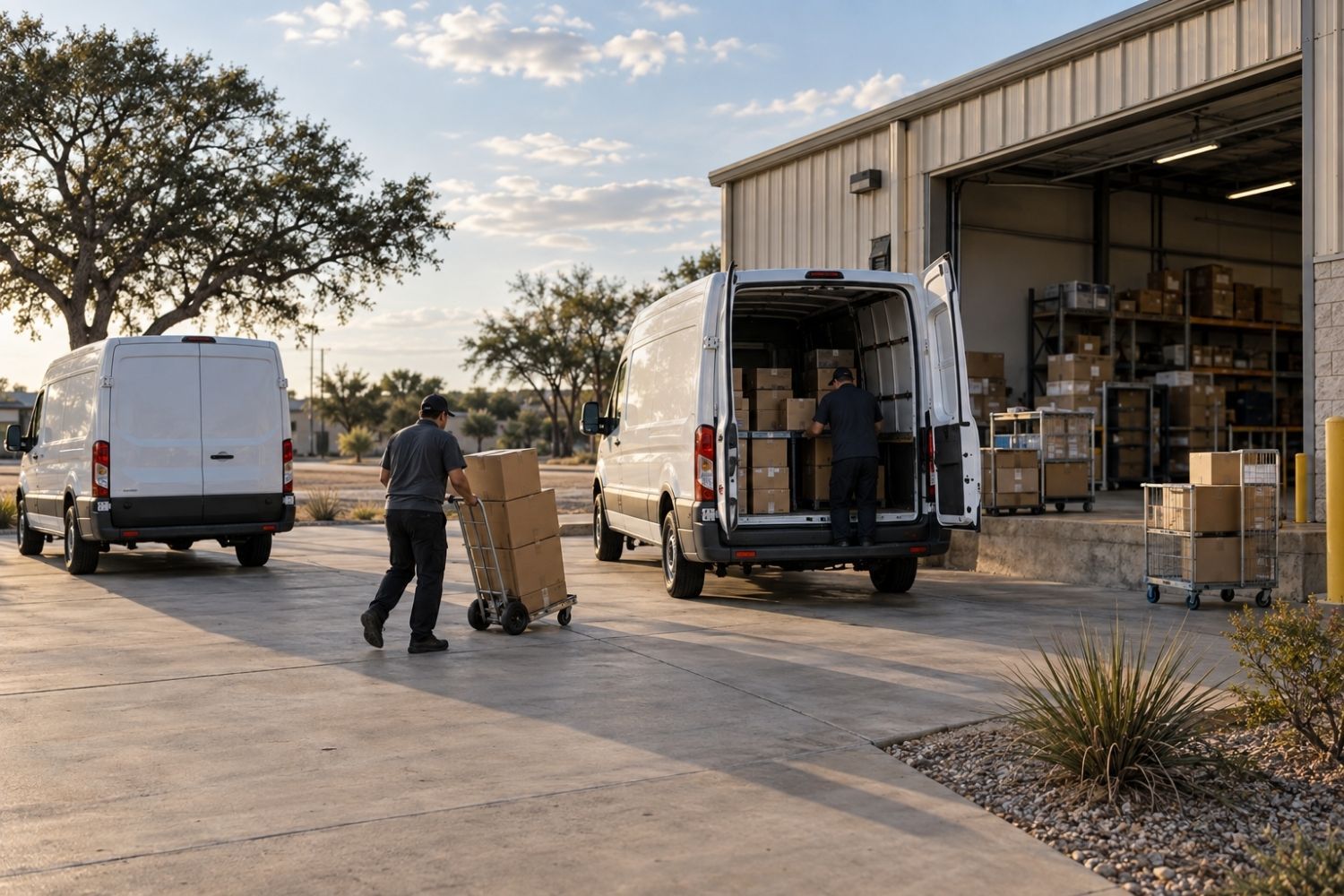
The explosion of e-commerce has put more delivery vehicles on Texas roads than ever. These operations face unique challenges: frequent stops, tight schedules, and drivers working in unfamiliar neighborhoods.
Insurers classify delivery operations by cargo type, delivery radius, and vehicle weight. A courier service delivering documents within Dallas pays different rates than a food delivery operation covering the entire DFW metroplex. Expect premiums ranging from $3,000 to $8,000 per vehicle annually for active delivery fleets.
Construction and Heavy Machinery Transport
Hauling equipment between job sites creates liability exposure that standard policies often exclude. Overweight vehicles, wide loads, and equipment loading/unloading all require specific coverage endorsements.
Construction fleets typically need motor truck cargo coverage, equipment floaters, and higher liability limits. Denton Business Insurance regularly works with contractors who discover their policies exclude certain equipment transport only after filing a claim. Getting this right upfront prevents expensive surprises.
Factors Influencing Texas Premiums in 2026
Premium calculations aren't mysterious. Insurers weigh specific factors, and understanding them helps you control costs.
Impact of Telematics and Fleet Tracking
GPS tracking and telematics devices reduce premiums by 10% to 25% for most fleets. Insurers reward businesses that monitor driver behavior, maintain speed compliance, and track vehicle locations.
Beyond premium discounts, telematics data helps defend against fraudulent claims. When a plaintiff claims your driver was speeding, GPS data showing 32 mph in a 35 zone ends the argument. The initial investment in tracking technology typically pays for itself within the first year through insurance savings alone.
Regional Risk Zones: Houston vs. Rural Texas
Where you operate matters enormously. Houston's commercial auto premiums run 40% to 60% higher than rural areas due to traffic density, accident frequency, and lawsuit-friendly juries. Harris County leads the state in commercial vehicle litigation.
Dallas-Fort Worth and San Antonio fall in the middle, while West Texas and Panhandle operations enjoy the lowest rates. If your business operates across multiple regions, your premium reflects a weighted average of where your vehicles actually spend time.
| Region | Relative Premium Cost | Primary Risk Factors |
|---|---|---|
| Houston Metro | Highest (+40-60%) | Traffic density, litigation |
| Dallas-Fort Worth | High (+20-35%) | Congestion, theft |
| San Antonio | Moderate (+10-20%) | Urban traffic |
| Rural Texas | Baseline | Lower traffic, longer response times |
Navigating the Claims Process and Legal Landscape
Filing a claim is stressful. Understanding the process and legal environment beforehand makes everything smoother.
Texas Tort Laws and Liability Defense
Texas follows modified comparative fault rules. If your driver is found 51% or more at fault, you're liable for the entire claim. Below 51%, damages are reduced proportionally. This creates strong incentives for aggressive plaintiff attorneys to push fault percentages above that threshold.
Commercial vehicle accidents attract more litigation than personal auto claims. Plaintiff attorneys know businesses carry higher limits and often pursue maximum damages. Your insurer provides legal defense, but policy limits determine your exposure. Carrying inadequate coverage means personal assets become targets.
Document everything after accidents. Photos, witness information, and immediate incident reports strengthen your defense. Many claims that seem straightforward become complicated months later when medical bills escalate.
Strategies for Lowering Commercial Auto Costs
Premium reduction doesn't require sacrificing coverage. Smart businesses use multiple strategies to control costs while maintaining protection.
Start with driver qualification. Insurers offer significant discounts for drivers with clean records and commercial driving experience. Implementing formal driver training programs can reduce premiums by 5% to 15%. Some carriers offer specific discounts for defensive driving certifications.
Bundle your policies. Combining commercial auto with general liability and property coverage through a Business Owner's Policy typically saves 10% to 20% compared to separate policies. Working with an independent agency like Denton Business Insurance lets you compare bundled options across multiple carriers including Nationwide, Travelers, and Chubb.
Increase deductibles strategically. Moving from a $500 to $2,500 deductible reduces premiums substantially, but only makes sense if you can absorb that cost after an accident. Calculate your break-even point based on your claims history.
Review your vehicle classifications annually. Insurers charge different rates based on vehicle type, weight, and usage. Ensuring accurate classifications prevents overpaying for coverage you don't need.
Frequently Asked Questions
Does my personal auto policy cover occasional business use? Almost never. Personal policies exclude regular business use, and insurers deny claims when they discover commercial activity. Even occasional use creates gaps.
How quickly can I get commercial auto coverage in Texas? Same-day coverage is available from most carriers. However, rushing the process often means missing important coverage options. Plan at least a few days for proper policy review.
What happens if my employee causes an accident in a company vehicle? Your commercial auto policy responds first. The employee's personal insurance typically doesn't apply when driving company vehicles for work purposes.
Are electric vehicles more expensive to insure commercially? Currently yes, primarily due to higher repair costs and parts availability. Expect premiums 10% to 20% higher than comparable gas vehicles, though this gap is narrowing.
Do I need commercial coverage for a vehicle I only use part-time for business? If you use any vehicle regularly for business purposes, commercial coverage is necessary. "Part-time" business use still creates commercial liability exposure.
Making the Right Coverage Decision
Getting commercial auto insurance right protects everything you've built. Texas roads are dangerous, juries are generous to plaintiffs, and state minimums leave you exposed. The businesses that survive serious accidents are the ones that invested in proper coverage before they needed it.
Review your current policy against the requirements and coverage types outlined here. If you're carrying state minimums or haven't updated your coverage in several years, you're likely underinsured for 2026 conditions. An independent agency can compare options across multiple carriers and identify gaps you might miss reviewing policies alone.
Your vehicles are on Texas roads every day. Make sure your coverage matches the risk.
ABOUT THE AUTHOR:
DAVID CALL
I'm the founder of Denton Business Insurance, a local independent agency serving commercial clients across Denton and the state of Texas. With a hands-on approach to commercial risk, I help business owners — from contractors and restaurateurs to property managers and manufacturers — find the right coverage without the guesswork of working with a single-carrier agent.