See How We're Different
Call Us: (940) 268-5112
A pressure washer slips off a ladder while cleaning third-story windows at a commercial building in Fort Worth. He breaks his wrist, the client's window frame is cracked, and the building owner is already on the phone with an attorney. In the span of about four seconds, this franchise owner is staring down a workers' comp claim, a general liability claim, and potential legal defense costs that could reach five figures before anyone even sees a courtroom.
This is the kind of scenario that keeps franchise owners up at night, and it's far more common than most people think. Window cleaning is physically demanding, height-dependent work performed on other people's property, which makes it one of the riskier service trades from an insurance standpoint. If you're running a window cleaning franchise in Texas, knowing what insurance coverage you need isn't optional knowledge: it's the difference between surviving a bad day and closing your doors.
The right mix of liability, property, auto, cyber, and workers' compensation coverage protects your franchise from the specific risks you'll face across Texas, from hailstorms in Dallas to slip-and-fall claims in Houston. Here's what each type of coverage actually does, what it costs, and where franchise owners commonly get it wrong.
Essential Liability Coverage for Texas Window Cleaners
General Liability: Protecting Against Third-Party Injury and Property Damage
Professional Liability vs. General Liability: Understanding the Difference
Care, Custody, and Control Endorsements
A care, custody, and control (CCC) endorsement closes this gap. For window cleaners, this endorsement is practically mandatory. The cost is modest, usually $100 to $300 added to your annual premium, but the protection is significant. Franchise systems like Fish Window Cleaning specifically highlight
the importance of carrying proper insurance that addresses these exact scenarios.
Comparison: Basic vs. Comprehensive Franchise Coverage
Not all franchise insurance packages are created equal. Here's how a stripped-down policy stacks up against a more complete program:
| Coverage Element | Basic Package | Comprehensive Package |
|---|---|---|
| General Liability | $1M/$2M limits | $1M/$2M + umbrella to $5M |
| Professional Liability | Not included | Included |
| CCC Endorsement | Not included | Included |
| Commercial Auto | State minimums only | $1M combined single limit |
| Workers' Comp | Non-subscriber opt-out | Full statutory coverage |
| Cyber Liability | Not included | $1M limit |
| Inland Marine | Not included | Covers tools/equipment in transit |
| Estimated Annual Cost | $2,200 - $3,500 | $5,500 - $9,000+ |
The basic package might save you $3,000 a year, but one uncovered claim can cost ten times that. Franchise owners who work with an independent agency like Denton Business Insurance can compare quotes from carriers like Nationwide, Travelers, and Chubb to find the right balance between cost and coverage. The key is looking beyond price: check deductibles, exclusions specific to your industry, and whether legal defense costs count inside or outside your policy limits.
Protecting Your Physical Assets and Mobile Equipment
Your franchise isn't just people and liability exposure. You've got physical stuff that needs protecting too: office space, equipment, scaffolding, water-fed pole systems, and specialized cleaning solutions.
Commercial Property Insurance for Franchise HQs
If you lease or own office or warehouse space, commercial property insurance covers the building (if you own it), your business personal property inside, and loss of income if a covered event shuts you down temporarily. Texas-specific risks make this coverage particularly important. Winter Storm Uri in 2021 caused billions in property damage across the state, and Gulf Coast hurricanes remain an annual threat for franchises operating near Houston or Corpus Christi.
When selecting property coverage, pay attention to whether your policy covers flood damage separately (most don't: you'll need a standalone flood policy) and whether windstorm coverage requires a TWIA policy if you're in a coastal county.
Inland Marine Insurance for Tools and Scaffolding in Transit
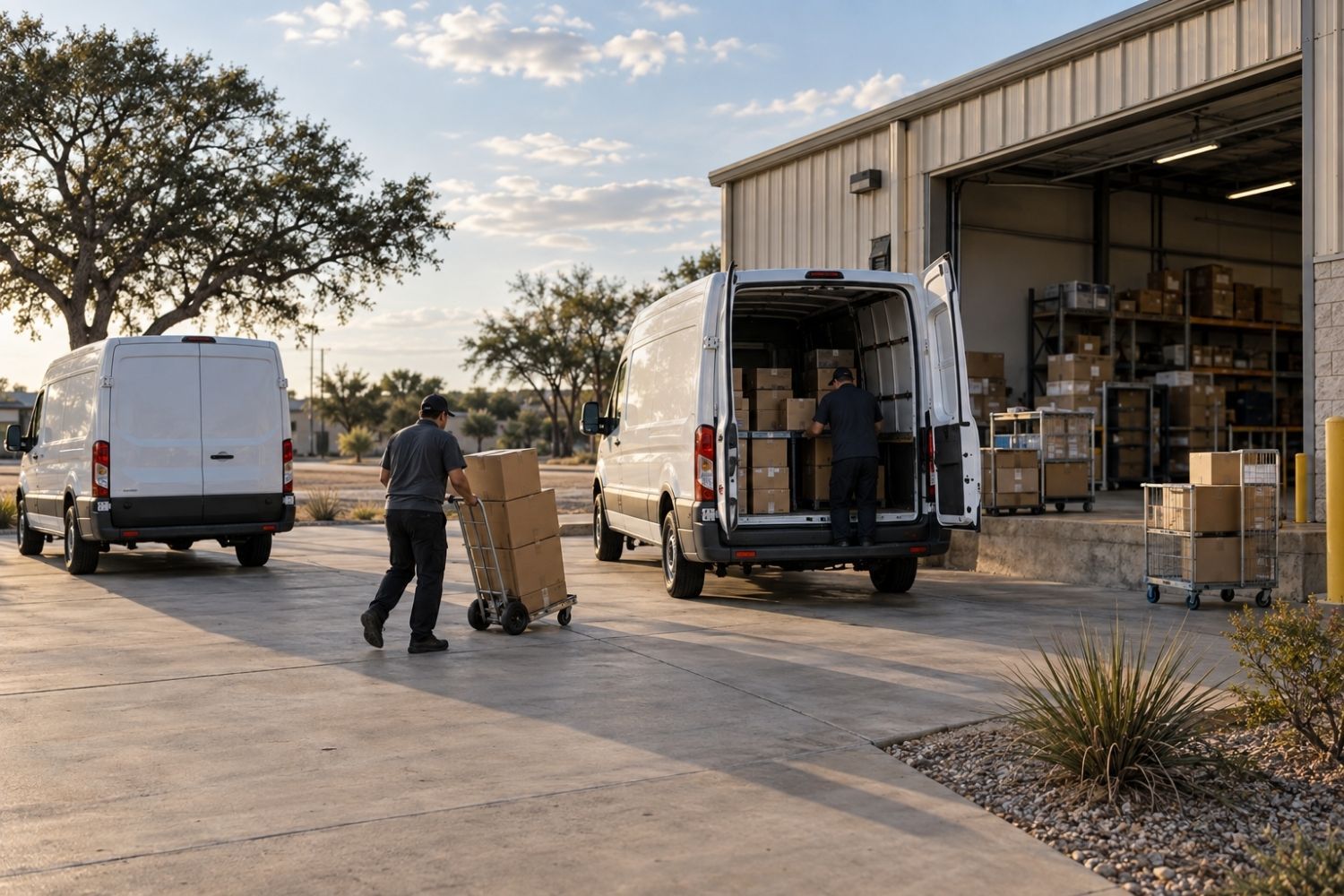
Standard commercial property policies cover your stuff while it's sitting in your office or warehouse. The moment it leaves that location, coverage typically ends. That's a problem when your business model involves loading $10,000 worth of water-fed poles, scaffolding, and lift equipment into vans every morning.
Inland marine insurance covers tools and equipment while they're in transit or at a job site. For a window cleaning franchise, this is non-negotiable. A van break-in or a highway accident could wipe out your equipment inventory overnight. Premiums are reasonable, often between $185 and $240 annually for typical equipment values, and the coverage applies anywhere your gear travels.
Vehicle and Employee Safety Regulations in Texas
Texas has specific rules about commercial vehicles and employee coverage that directly affect how you structure your insurance program.
Commercial Auto Insurance for Service Vans
If your franchise uses vehicles for business purposes, and it almost certainly does, personal auto policies won't cover accidents that happen during work. You need a commercial auto policy. Texas requires minimum liability limits of $30,000 per person / $60,000 per accident for bodily injury and $25,000 for property damage.
Those minimums are dangerously low for a franchise operation. A single serious accident can blow through $60,000 in medical bills before the ambulance reaches the hospital. Most insurance professionals recommend a combined single limit of at least $500,000 to $1 million. If your franchise has multiple vehicles, a fleet policy often reduces per-vehicle costs. Make sure your policy covers hired and non-owned auto liability as well, which protects you when employees use personal vehicles for work errands.
Workers' Compensation: Texas Non-Subscriber Rules vs. Traditional Policies
Texas stands alone as the only state where private employers can legally opt out of workers' compensation insurance. This "non-subscriber" status might seem like a cost-saving move, but the trade-offs are serious.
Non-subscribers lose three common-law defenses if an injured employee sues: contributory negligence, assumption of risk, and the fellow-servant doctrine. That means if your window cleaner falls from a ladder, you can't argue they knew the job was dangerous or that a coworker caused the fall. You're essentially exposed to the full liability. Texas businesses that don't carry workers' comp must still report that status and maintain certain injury benefit plans to comply with state law.
For a window cleaning franchise with employees regularly working at height, traditional workers' comp coverage is the safer path. Premiums depend on your payroll, classification codes, and experience modification rate, but the protection against a catastrophic injury claim is worth the cost.
Modern Threats: Cyber Liability and Data Protection
You might think a window cleaning franchise doesn't need cyber insurance. You'd be wrong. If you store customer credit card numbers, process payments through a POS system, use scheduling software with client data, or even just have an email list, you have cyber exposure.
A data breach affecting customer payment information triggers notification requirements under Texas law, and those notifications aren't free. Forensic investigation, credit monitoring for affected customers, and potential regulatory fines add up fast. The Texas sales tax rate of 8.25% on taxable services means you're processing real financial transactions that contain sensitive data.
Cyber liability policies for small service franchises typically cost $500 to $1,500 per year and cover breach response costs, legal defense, and regulatory fines. Franchise systems that handle customer data centrally, like
Men In Kilts and similar brands, often require franchisees to carry their own cyber coverage as well.
Common Questions About Texas Window Cleaning Insurance
Do I need insurance if my franchisor already has a corporate policy? Corporate policies typically protect the franchisor, not individual franchise locations. You almost always need your own policies. Check your franchise agreement for specific coverage requirements.
How much does a full insurance package cost for a small window cleaning franchise? Expect to pay between $4,000 and $9,000 annually for a comprehensive package. Your exact cost depends on payroll, number of vehicles, claims history, and coverage limits. Franchises that prioritize the right coverage mix from day one tend to pay less over time.
Can I save money by choosing higher deductibles? Yes, but be strategic. A $2,500 deductible instead of $500 can reduce premiums noticeably, but make sure you can actually afford that deductible if a claim hits. For a franchise with tight cash flow, a lower deductible might be worth the extra premium.
What happens if I let my insurance lapse? Beyond the obvious risk of an uninsured claim, most franchise agreements require continuous coverage. A lapse could put your franchise agreement in jeopardy and create gaps that future insurers will ask about, potentially raising your rates.
Should I look for carriers with A.M. Best ratings? Absolutely. Stick with carriers rated A- or better by A.M. Best. A low-rated carrier might offer cheaper premiums, but if they can't pay claims when you need them, the savings are meaningless. Ask about local claims handling too: a carrier with adjusters in Texas will resolve your claims faster than one routing everything through a national call center.
Is an umbrella policy worth it? For most window cleaning franchises, yes. An umbrella policy adds an extra layer of liability protection above your GL, auto, and employers' liability limits. A $1 million umbrella typically costs $300 to $600 per year, which is remarkably affordable for the coverage it provides.
Making the Right Choice for Your Franchise
Getting insurance right for a Texas window cleaning franchise means understanding that your risk profile is different from a typical service business. Height work, mobile equipment, customer property exposure, and employee safety all demand specific coverage solutions.
The biggest mistake franchise owners make is buying the cheapest policy they can find without reading the exclusions. A $2,000 GL policy with a care, custody, and control exclusion is practically useless for a window cleaner. The second-biggest mistake is skipping workers' comp because Texas doesn't require it, then facing a six-figure lawsuit with no defenses.
An independent agency like Denton Business Insurance can compare options across multiple carriers to find coverage that actually fits your franchise's operations and budget. We're based in Denton, but we work with franchise owners across Texas, and we've seen firsthand what happens when coverage gaps go unaddressed.
Get your policies reviewed before your next renewal. If you're launching a new franchise location, build insurance into your startup budget from the beginning. The right coverage isn't an expense: it's what keeps your business standing after the worst day you can imagine.
ABOUT THE AUTHOR:
DAVID CALL
I'm the founder of Denton Business Insurance, a local independent agency serving commercial clients across Denton and the state of Texas. With a hands-on approach to commercial risk, I help business owners — from contractors and restaurateurs to property managers and manufacturers — find the right coverage without the guesswork of working with a single-carrier agent.