
Texas Fleet Wash and Mobile Truck Wash Insurance

See How We're Different
Call Us: (940) 268-5112
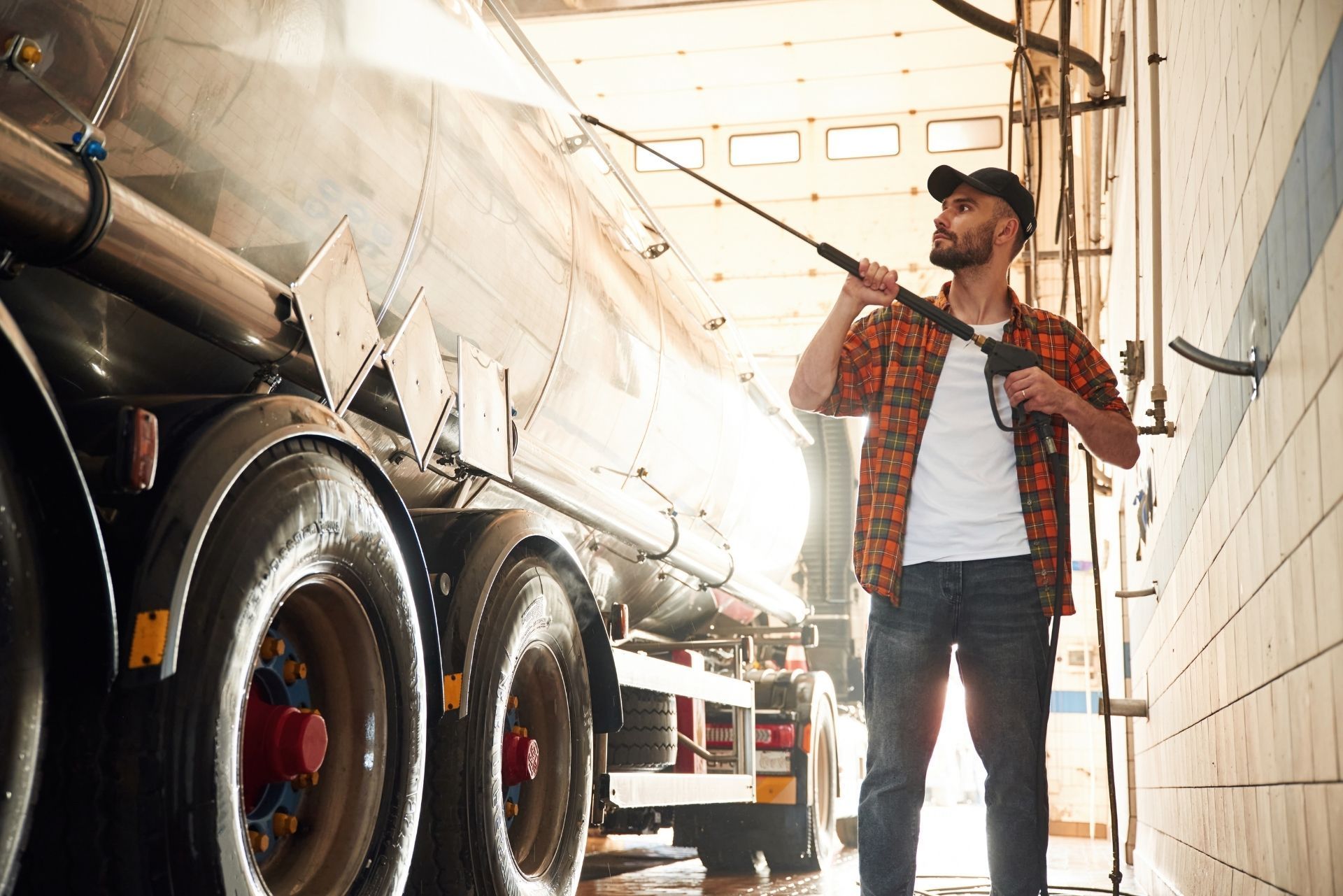
A pressure washer slips off a trailer hitch mount, swings into the side of a $180,000 Peterbilt, and gouges a line from the cab to the sleeper. The truck's owner wants a check by Friday. Your
general liability insurer says the truck was "in your care, custody, and control," so it's not their problem. Without the right policy, that repair bill comes straight out of your pocket. This is the kind of scenario that plays out regularly for mobile wash operators across Texas, and it's exactly why fleet wash and
mobile truck wash insurance matters so much in this state. Texas has more registered commercial trucks than any other state, which means more demand for mobile wash services, but also more exposure every time you pull onto a customer's lot. Between environmental regulations, rising
commercial auto premiums, and the sheer value of the equipment you're working around, a generic business policy won't cut it. The right coverage protects your operation from the risks that are specific to your trade, not some hypothetical business the insurance company imagined when it wrote the form. That's the difference between staying in business after a bad day and closing up shop.
Why Texas Mobile Truck Wash Businesses Need Specialized Insurance
Mobile truck wash operators face a unique combination of risks that standard commercial policies simply weren't designed to address. You're working on someone else's property, handling their vehicles, using chemical solutions near storm drains, and hauling expensive equipment from site to site. Each of those activities creates a distinct liability exposure, and a gap in any one of them can wipe out a small operation overnight.
Texas adds its own wrinkles. The state's trucking industry is enormous, and the contracts that fleet managers require before letting you onto their yard are getting more demanding every year. Most now require proof of specific coverage types, minimum limits, and additional insured endorsements. If your policy doesn't match their requirements, you don't get the job.
Managing Risks of On-Site Fleet Cleaning
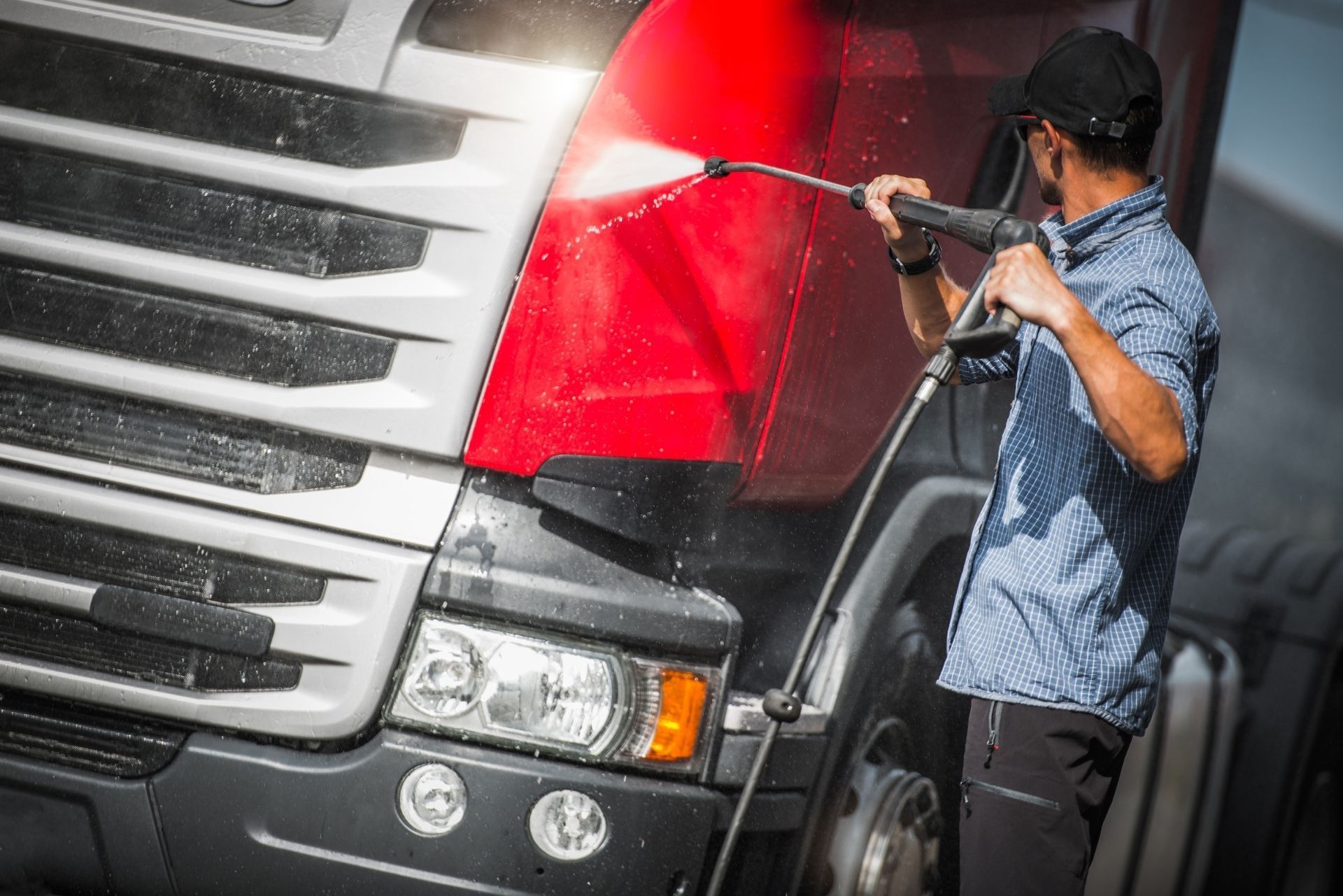
Every time you set up on a customer's lot, you're assuming responsibility for a long list of potential problems. Slip-and-fall injuries are common: wet pavement, hoses stretched across walkways, and chemical overspray create hazards for your crew and anyone walking nearby. Damage to vehicles is another constant risk. High-pressure water can strip decals, crack windshields, and force water into electrical systems if the operator isn't careful.
Then there's the equipment itself. A mobile wash rig can easily represent $30,000 to $75,000 in pressure washers, water reclamation systems, chemical tanks, and the trailer or truck that hauls it all. If that rig is stolen from a job site or damaged in a collision on the way to a client, you need coverage that follows your equipment wherever it goes, not just when it's parked at your shop.
Texas-Specific Environmental and Liability Regulations
Texas cities enforce stormwater regulations that directly affect mobile wash operators. Fort Worth, for example, requires power washing operations to prevent wash water from entering storm drains, and Austin has similar rules for mobile car washes and pressure washers. Violations can result in fines ranging from a few hundred dollars to tens of thousands, depending on whether contaminants reach a waterway.
On the liability side, Texas HB 19 changed how trucking accident lawsuits are handled, and those changes
ripple into how fleet owners manage their vendor relationships. Fleet managers are more cautious about who they let near their trucks, and they're pushing more insurance requirements onto subcontractors and service providers, including wash operators.

By: Linda Dodson
Agency Director at
Denton Business Insurance
Getting the right insurance for a mobile truck wash operation means assembling several coverage types that work together. No single policy handles everything, and the specific combination you need depends on your services, your client contracts, and the size of your crew.
General Liability and Garagekeepers Coverage
General liability is the foundation. It covers third-party bodily injury and property damage that happens because of your operations. If a bystander slips on your wash runoff or your hose damages a fence, GL responds. Premiums for a small mobile wash operation in Texas typically start around $800 to $2,000 per year for a $1M/$2M policy, depending on revenue and claims history.
But here's the critical gap: GL excludes damage to property in your care, custody, or control. That means the truck you're actively washing isn't covered. For that, you need Garagekeepers Legal Liability. This coverage pays for physical damage to a customer's vehicle while you're working on it. Given that a single semi-truck can be worth $150,000 or more, skipping this coverage is a gamble most operators can't afford.
Pollution Liability and Wash Water Runoff Protection
Pollution liability is the coverage most mobile wash operators don't think about until they need it. Your cleaning chemicals, degreasers, and even the dirty wash water itself are classified as pollutants under most standard liability policies, which means your GL won't cover a spill or runoff incident. Texas environmental enforcement agencies take contamination events seriously, and cleanup costs can escalate fast.
A standalone pollution liability policy covers cleanup expenses, third-party bodily injury from pollutant exposure, and legal defense costs if a regulatory agency comes after you. Premiums vary widely based on the chemicals you use and your water reclamation practices, but expect to pay $1,200 to $4,000 annually for meaningful limits.
Inland Marine for Mobile Equipment and Pressure Washers
Standard commercial property insurance covers equipment at your listed business location. Your mobile wash rig spends most of its life on the road or at client sites, which is exactly where property insurance stops covering it. Inland marine insurance fills that gap by protecting equipment in transit and at temporary job locations.
This is particularly important for pressure washers, water reclamation units, chemical injection systems, and any specialized tools you carry. If your trailer is stolen from a truck stop or your pressure washer is damaged when a forklift backs into it at a client's yard, inland marine responds. At Denton Business Insurance, we regularly write inland marine policies for mobile service operators because the coverage gap without it is too large to ignore.
Comparing Standard vs. Enhanced Fleet Wash Policies
Not all policies are built the same, and understanding the difference between a bare-minimum package and a properly structured one can save you from a devastating claim denial.
| Coverage Feature | Standard Policy | Enhanced Policy |
|---|---|---|
| General Liability | $1M/$2M, basic form | $1M/$2M with broader endorsements |
| Garagekeepers | Not included | $100K-$500K per vehicle |
| Pollution Liability | Excluded | $500K-$2M, includes cleanup |
| Inland Marine | Not included | Scheduled equipment, full replacement |
| Workers' Comp | Optional in TX | Included, meets fleet contract requirements |
| Hired/Non-Owned Auto | Not included | Included for employee vehicle use |
| Additional Insured | Limited or unavailable | Available for client contracts |
The standard policy might cost less upfront, but it leaves you exposed on nearly every front that matters for mobile wash work. Most fleet contracts won't accept a standard policy because it lacks garagekeepers and pollution coverage.
How Denton Business Insurance Helps Mobile Wash Operators
Because we're an independent agency, we aren't locked into a single carrier's product. We shop your coverage across multiple insurers, including Nationwide, Travelers, and other top-rated companies, to find the combination that fits your specific operation. A two-person crew running one rig has very different needs than a company with five trucks and fifteen employees.
We also understand the contract requirements that Texas fleet managers impose. Many of our clients come to us after losing a contract because their previous policy didn't include the right endorsements or limits. We review your client contracts before binding coverage so you're not caught off guard. That kind of detail matters when your livelihood depends on staying approved to work on someone else's lot.
Factors That Influence Insurance Costs in Texas
Insurance costs for mobile wash operators aren't random. Carriers evaluate specific risk factors when pricing your policy, and understanding them gives you some control over what you pay.
Texas commercial auto premiums are projected to increase by 8% to 25% in 2026, even for accounts with clean loss histories. That trend affects anyone who operates a commercial vehicle, including mobile wash operators hauling equipment between job sites.
Service Volume and Number of Employees
The more trucks you wash and the more employees you have, the higher your exposure. Carriers look at annual revenue as a proxy for how many jobs you're running, and they price accordingly. A solo operator washing 20 trucks a week will pay significantly less than a crew of ten handling 200 trucks daily.
Workers' compensation is another cost driver tied to headcount. Texas is the only state where private employers aren't legally required to carry workers' comp, but operating without it is risky. Most fleet contracts demand it, and if an employee is injured on the job without coverage, you're exposed to direct lawsuits with no policy to defend you.
Types of Chemicals and Cleaning Methods Used
Carriers care about what you're spraying. Operators using caustic degreasers, acid-based wheel cleaners, or high-concentration surfactants face higher pollution liability premiums than those using biodegradable or low-toxicity products. Your water reclamation practices matter too. If you can demonstrate that you capture and properly dispose of wash water, some carriers will reduce your pollution liability premium.
High-pressure washing also carries more risk of vehicle damage than low-pressure or hand-wash methods. The PSI rating of your equipment and your training protocols for employees both factor into how carriers assess your risk profile. Environmental liability coverage is priced partly on these operational details.
Common Questions About Texas Truck Wash Insurance
Do I need insurance if I only wash trailers manually?
Yes. Accidents like slipping on wet pavement or damaging a trailer's finish can happen regardless of your tools. A basic liability policy protects you from these high out-of-pocket costs.
Does general liability cover damage to the truck I am currently washing?
Usually no. You need Garagekeepers Legal Liability to cover physical damage to a customer's vehicle while it is in your care, custody, or control.
What happens if my cleaning chemicals leak into a storm drain?
Without pollution liability, you could face massive fines from Texas environmental agencies. This specific coverage helps pay for cleanup costs and legal penalties.
Is Workers' Comp required for mobile wash crews in Texas?
Texas does not legally require private employers to have it, but most fleet contracts will demand it before you can step onto their lot. It also protects you from lawsuits if a worker is injured.
How quickly can I get proof of insurance for a new fleet contract?
Most policies can be bound within 24 to 48 hours once underwriting has your application and supporting documents. Certificates of insurance with additional insured endorsements can typically be issued the same day the policy is active.
Can I bundle my truck wash insurance with my commercial auto policy?
Often, yes. Bundling your GL, garagekeepers, inland marine, and commercial auto through the same carrier or agency can reduce your total premium and simplify your renewals. An independent agency like Denton Business Insurance can quote these together across multiple carriers to find the best combination.
Protecting Your Assets for Long-Term Growth
Running a mobile truck wash business in Texas means operating in a market with strong demand and real risk. The trucks you clean are expensive, the chemicals you use are regulated, and the contracts you depend on require specific proof of coverage. Cutting corners on insurance might save a few hundred dollars a year, but a single uninsured claim can cost you everything you've built.
The smartest operators treat insurance as part of their business infrastructure, not an afterthought. Get the right coverage in place before you need it, review your policies annually as your operation grows, and make sure your limits and endorsements match what your clients actually require. If you're unsure whether your current policy has gaps, reach out to Denton Business Insurance for a no-obligation review. We'll compare options across multiple carriers and make sure your coverage matches the work you're actually doing, not some generic template that leaves you exposed.
Straight from the Clients We Serve
Texas Business Owners Rate Us 5 Stars — Here Is Why
We hear the same things repeatedly: fast service, honest advice, and coverage that made sense for their situation. That is what we aim for every time.
Protection Across Every Area of Your BUSINESS
What Texas Businesses Need. What We Deliver.
From your job site and your fleet to your data and your payroll — we cover the risks that Texas businesses carry every day.
General Liability
Covers third-party claims of bodily injury, property damage, and advertising injury. A foundational protection for nearly every Texas business, regardless of industry or size.
Commercial Property
Covers your building, equipment, inventory, and business contents against fire, theft, storms, and vandalism. Can also include lost income if your businesses are forced to stop.
Commercial Auto
Protects vehicles your company owns, leases, or uses for work. Covers liability, collision damage, and injuries for employees driving on company time.
Errors & Omissions
Protects service providers when a client claims your advice, work, or recommendations caused them a financial loss. Critical for consultants, IT firms, agents, and other professional service businesses.
Directors & Officers
Covers leadership decisions that result in claims from employees, investors, or outside parties. Protects your directors and officers personally when management decisions are challenged.
Inland Marine & Equipment Floater
Covers tools, materials, and equipment that move between job sites or are stored off your primary property. Fills the gap where a standard commercial property policy stops.
Every Sector Has Its Own Risk Profile
We Know Your Trade. We Know Your Exposure.
We work with a wide range of Texas industries — each with different coverage priorities. Below are the sectors we serve most often.

Apartment Complexes
Texas apartment owners face liability across common areas, tenant incidents, and on-site staff. We cover your property, your income, and your exposure — across one complex or an entire portfolio.
Manufacturing Businesses
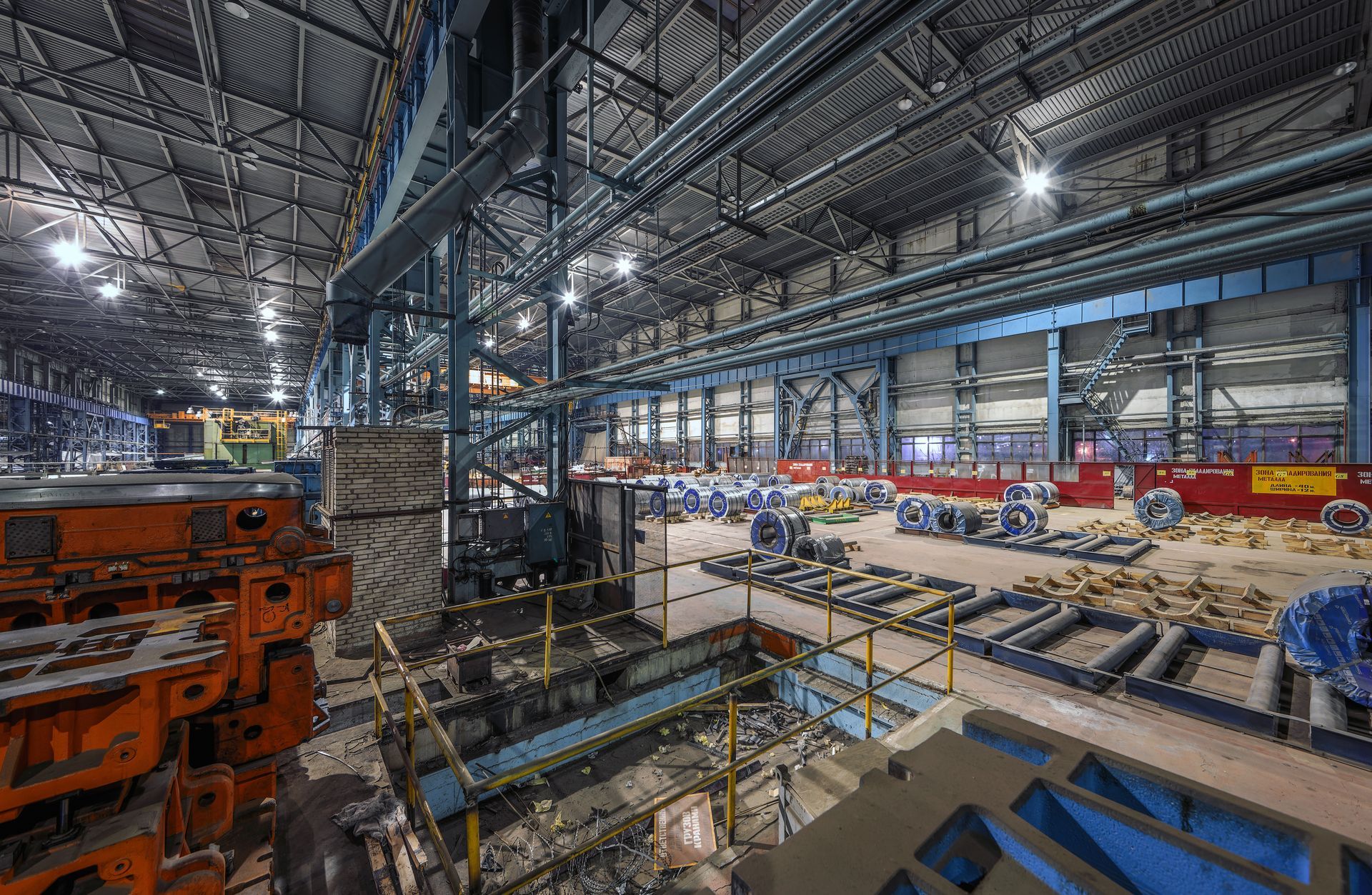
Equipment breakdowns, product liability, and workforce injuries are daily risks for Texas manufacturers. We build coverage from the shop floor to the loading dock — so one incident does not shut you down.
Artisan Contractors
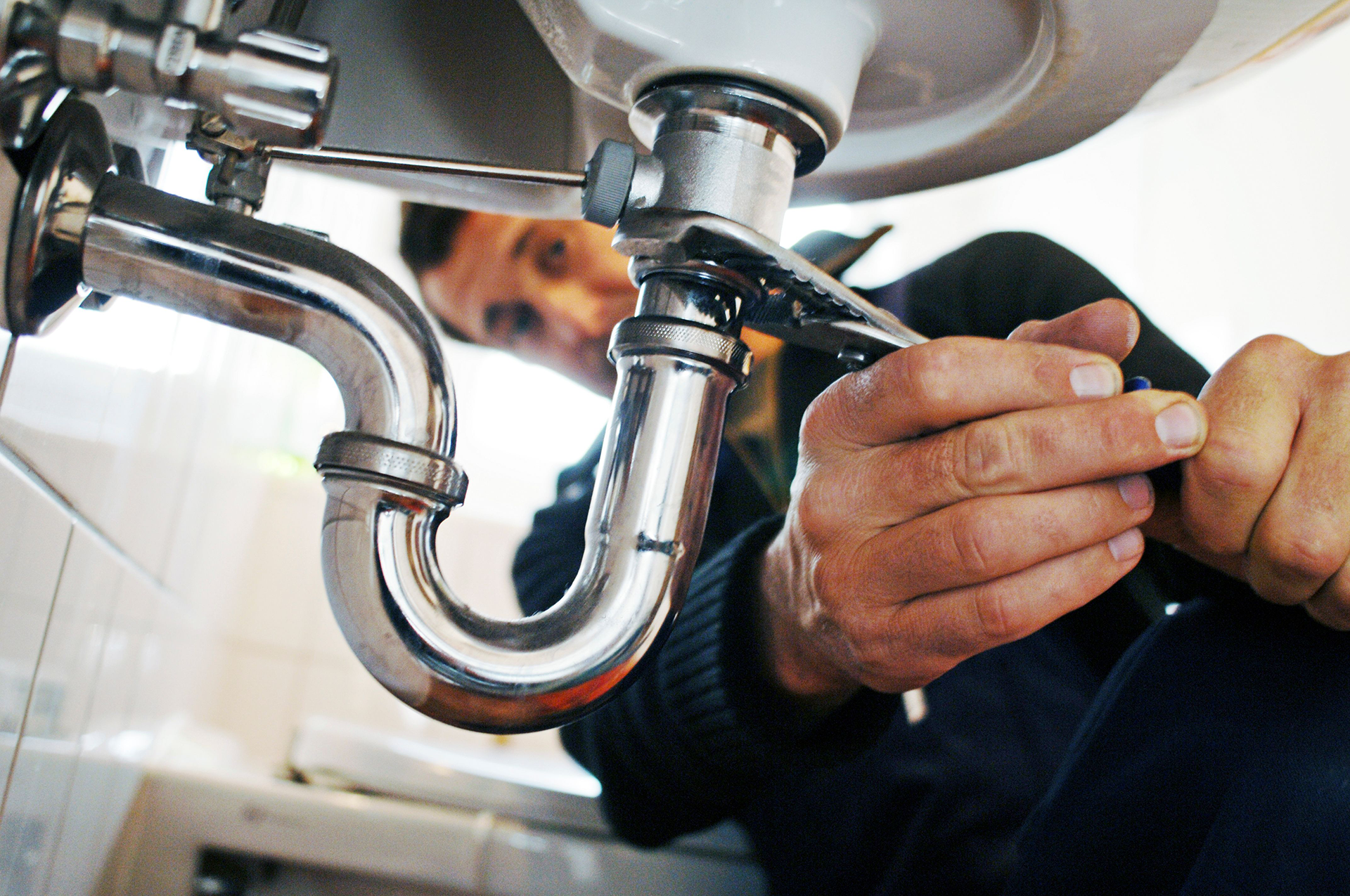
Plumbers, electricians, and skilled tradespeople work in high-risk environments every day. We build coverage around your tools, your vehicles, and your crew — so a job site incident does not stop your business.

Restaurants & Food Service
Restaurants carry liability on every shift — from the kitchen to the dining room and everything in between. We protect your location, your staff, and your equipment, including lost income when operations stop.

Non-Profits Service
Non-profits face unique liability across events, volunteers, staff, and leadership decisions. We cover your organization from the ground up — so you can focus on your mission, not your exposure.

Event Insurance
Event organizers face liability the moment guests arrive, vendors set up, and alcohol is served. We cover your event from start to finish — so one unexpected incident does not cancel everything you planned for.
Answers Before You Pick Up the Phone
What Texas Businesses Ask Us Most
We get a lot of the same questions from business owners across Texas. Here are honest answers to the ones that come up most.

What information do you need to get a commercial insurance quote?
We keep the process straightforward. We typically need your business name, a description of your operations, your gross annual sales projection, number of full-time and part-time employees, your gross annual payroll, and the types of coverage you are looking for. If you have an existing policy, the expiration date and current carrier help us put together a competitive comparison.
The most important thing you can do is be transparent about what your business actually does. Accurate classification ensures you have real coverage if a claim occurs. We have seen businesses with active policies that were incorrectly classified — and those gaps only surface at the worst possible moment.
Does Texas require businesses to carry Workers' Compensation Insurance?
Texas is the only state in the country that does not require most private employers to carry Workers' Compensation. However, if your business holds government contracts or works as a subcontractor on a job site, the hiring company will almost always require proof of coverage before work begins. A growing number of general contractors across Denton and the DFW area enforce this as a standard condition.
Even without a legal requirement, carrying Workers' Comp protects your business from direct liability if an employee is hurt on the job. Medical bills, lost wages, and legal fees can add up quickly — and one serious incident can create a financial loss that far exceeds years of premium payments.
What is a commercial insurance audit and should I expect one?
Most commercial general liability policies are auditable. At the end of your policy term, the insurance carrier reviews your actual gross sales to make sure your premium matched your real exposure. If your sales grew during the year, you may owe an additional premium. If sales came in lower, you could receive a refund.
The best way to avoid a large balance due at audit time is to update your projected gross sales with us during the year if your business grows faster than expected. We can endorse your policy mid-term to reflect the change and spread any additional premium across smaller installments instead of one lump sum at year-end.
What factors affect how much my commercial coverage will cost?
Your premium is calculated based on several variables specific to your operation — industry classification, gross annual sales, number of employees, gross payroll, claims history, and the types of coverage you need. A business that handles physical work with a crew on job sites will pay differently than a professional services firm working out of an office.
As an independent agency, we compare quotes across multiple carriers — including Travelers, The Hartford, Chubb, AmTrust, and others — to find the combination of coverage and price that works for your situation. There is no obligation after your quote, and we walk through every option in plain terms before you decide anything.
My business is a restaurant — what coverage do I actually need?
Restaurants are not a one-size-fits-all class of risk. Carriers look at a range of factors when evaluating a restaurant account: whether you serve alcohol, whether deep frying is involved, the type of fire suppression system in place, whether you have a hood cleaning contract, and whether you offer catering, delivery, or live entertainment. All of these affect both pricing and carrier appetite.
A well-structured restaurant policy typically includes general liability, building and business personal property coverage, liquor liability if applicable, food contamination coverage, business income protection, and workers' compensation for your staff. We work with carriers that actively want to write restaurant accounts in Texas — including Travelers, The Hartford, and Chubb — so you have real options to compare.
Can you help insure a business that is hard to place or outside the mainstream?
Yes — this is one of our strengths. We work with Excess and Surplus (E&S) lines markets through carriers like Burns & Wilcox for businesses that standard carriers will not write. We have placed coverage for master sign electricians, cable splicing operations, transmission rebuild shops for classic cars, CBD retailers, and many other non-standard accounts.
If you have been told your business is difficult to insure or you have received very limited options in the marketplace, reach out to us. We take time to understand your operations in detail, present your account to the right markets, and work to find coverage that actually reflects what you do — not a generic policy that leaves gaps.
Still have Question?
We’re here to help you!
Written for the Texas Business Owner
Insights That Help You Make Smarter Decisions
We publish articles on real topics that affect how Texas operators get covered — from local regulatory updates to coverage gaps most owners do not know they have.
Contact Us

